Pure Hardware Tetris on FPGA: Verilog Modular Design and Synthesis Verification
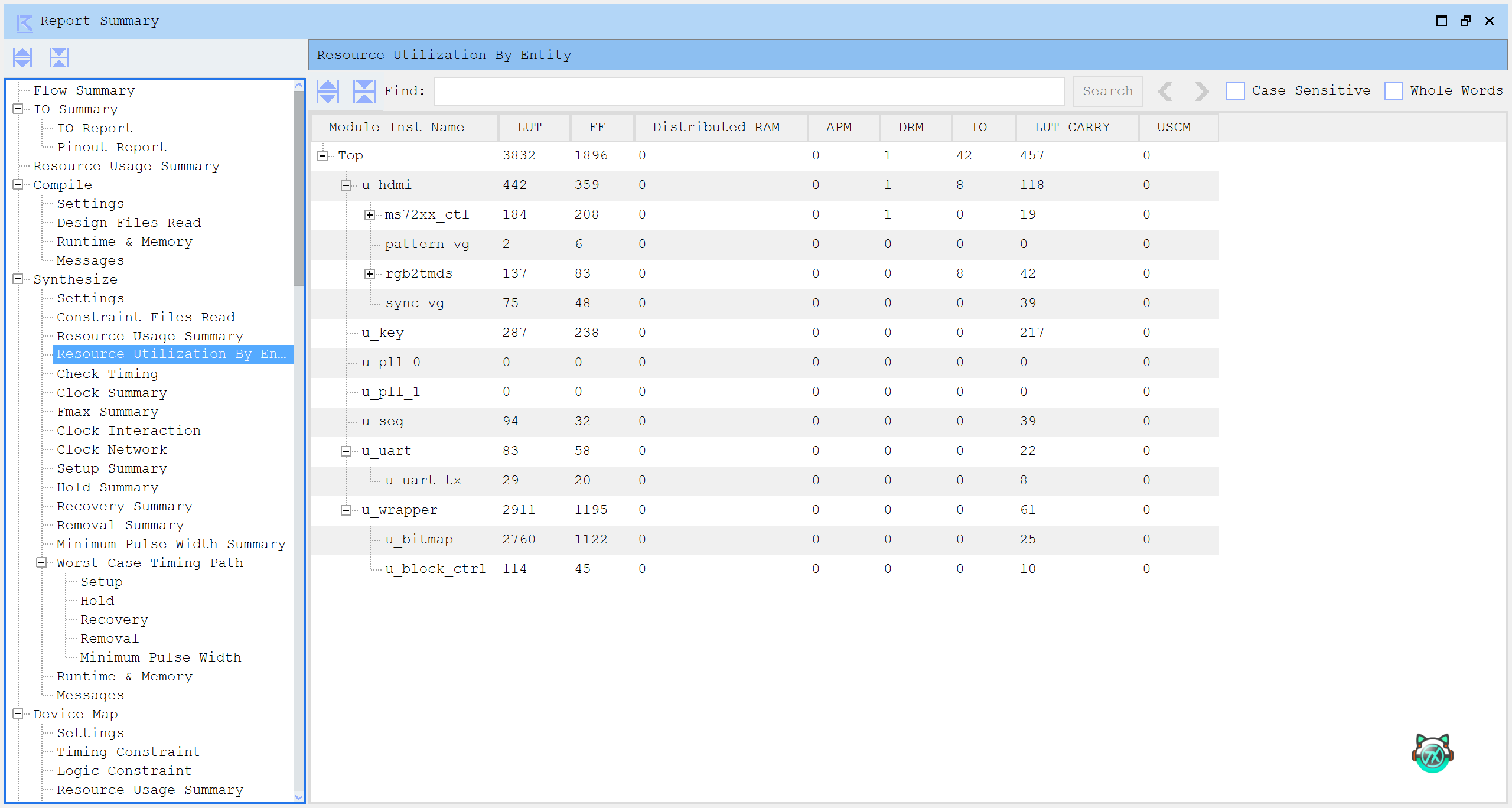
Implemented a complete Tetris game from scratch on FPGA using Verilog—including all seven standard tetrominoes (I/O/T/S/Z/J/L) with rotation, left/right movement, accelerated drop, line clearing with scoring, and real-time seven-segment display—all hardware logic, no CPU required.
1. Modular Hardware Architecture
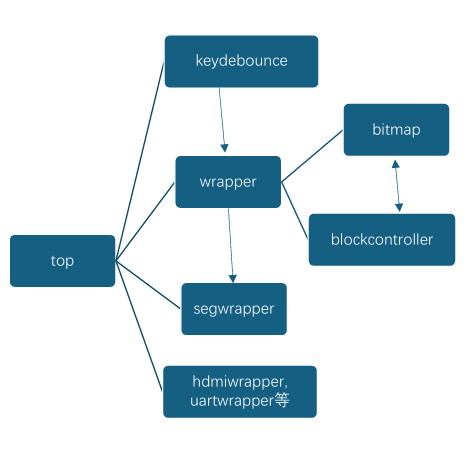
The game logic was decomposed into five independent modules, each with a dedicated responsibility, coordinated through a Wrapper:
- Keydebounce: Uses a counter to filter out mechanical key bounce, outputting stable key states
- Bitmap (Grid Manager): Maintains a 32×16-bit grid, handling piece descent, landing detection and fixation, line clearing detection, and full-row scoring
- BlockController (Tetromino Controller): Generates random pieces, responds to directional inputs, executes rotation (4×4 bit matrix rearrangement)
- Segwrapper (Seven-Segment Driver): State machine polling 4-digit seven-segment display for dynamic score refreshing
- Wrapper (Top-Level Scheduler): Manages game state (pause/speed), dispatches key events, generates descent tick signals
2. Key Design Details
Tetromino Rotation: Pure Bit Manipulation
Tetromino rotation is essentially a clockwise transposition of a 4×4 matrix. No lookup table was used—implemented purely with bit rearrangement:
Dual-Layer Grid: Dynamic Tetromino + Static Background
The Bitmap module maintains two grid layers: bitmap_l (the dynamic layer for the currently falling piece) and bitmap_h (the static layer for settled pieces). During display, the two layers are OR-combined; upon landing, bitmap_l is merged into bitmap_h:
Scoring System: Full-Row Detection
A 32-way parallel comparator detects the number of full rows, clearing and scoring in one pass—1 point for 1 line, 8 points for 4 lines (Tetris):
3. From Simulation to Synthesis
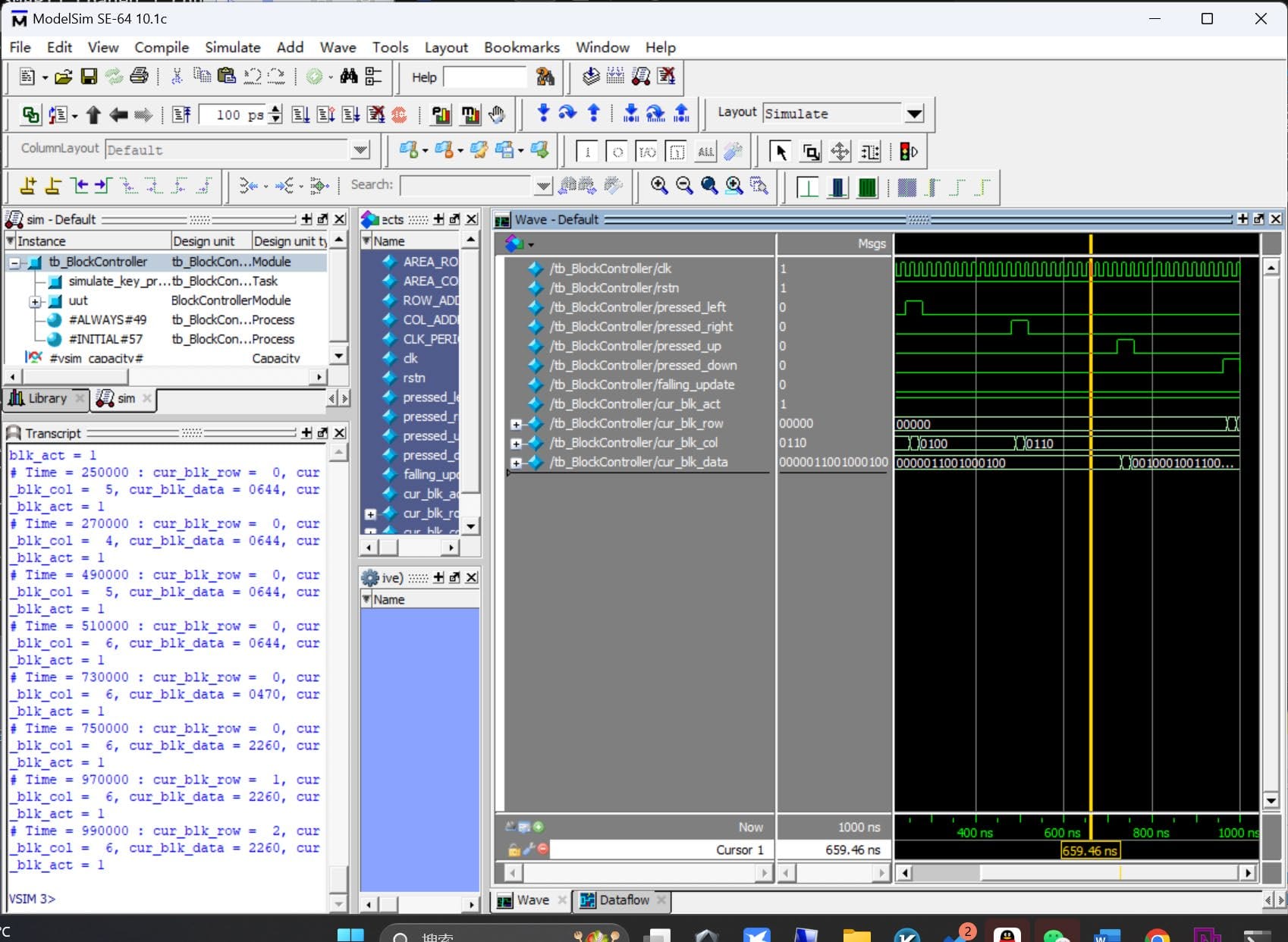
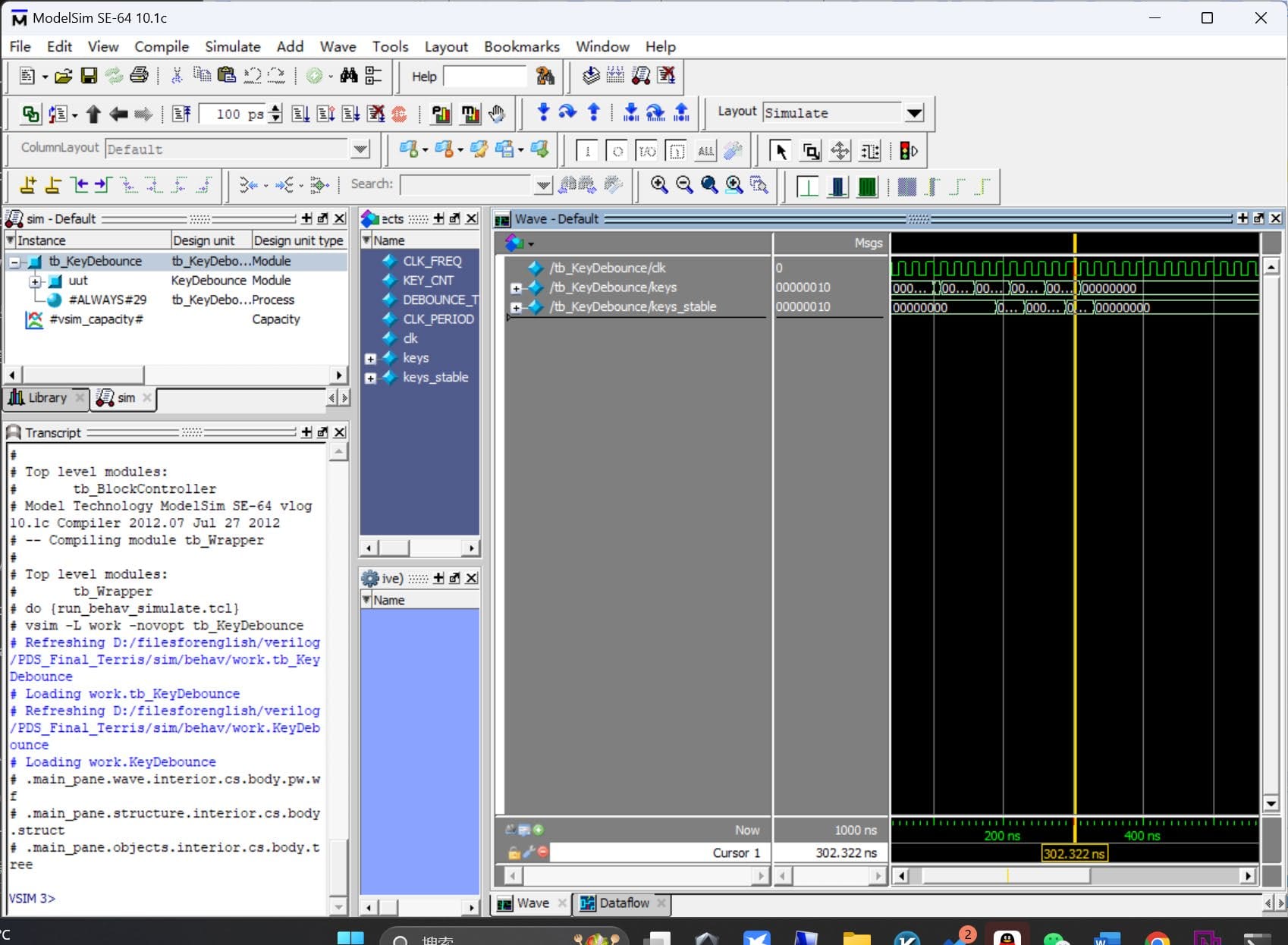
All five modules passed ModelSim functional simulation—key debouncing, piece movement and rotation, landing and fixation, line clearing and scoring, and seven-segment scanning display were all verified error-free. Subsequently, synthesis and place-and-route were completed in Vivado, and the bitstream file was successfully generated.
What makes this project special: no CPU, no operating system—all game logic (state machines, collision detection, scoring) is implemented entirely by pure combinational and sequential logic circuits. This represents a complete paradigm shift from software thinking to hardware thinking.
Comments